The Community Archive serves as a platform for arts education and a repository for collected creative wisdom.
The Community Archive serves as a platform for arts education and a repository for collected creative wisdom.
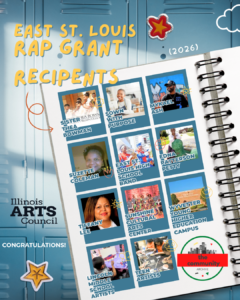
This program is partially supported by a grant from the Illinois Arts Council. The Community Archive administers the state agency’s East St. Louis Community Arts Access grants program.
 My name is Dr. Treasure Shields Redmond, and I am the founder and Executive Director of The Community Archive. My roots are in two places: Meridian, Mississippi where my mother — a visual artist — raised me to be a reader and lover of African American literature, and East St. Louis, Illinois where my father — a poet and photographer — created the world’s largest collection of images of Black writers which is now housed at Southern Illinois University at Edwardsville. My parents taught me to be a culture keeper, and as such, an archivist of community stories.
Archival work is Black feminist work. It is an act of communal mothering. It is an act of conjuring in the tradition of hoodoo, where the ancestors are always called to account.
When the writer Alice Walker recovered, the remains of folklorist and novelist Zora Neale Hurston, that was archival work.
After the Ferguson uprising, in 2014, I created a podcast, entitled Who Raised You? in collaboration with my friend, Jia Lian Yang. It is an archive of stories of activists, educators, and creatives, who all took part in direct actions and protests during the Ferguson uprising.
In 2015, I delved into poetry as an archive I completed *chop: a collection of kwansabas for fannie lou hamer,* which is a poetry book in the voice of Proto-feminist, civil rights warrior Fannie Lou Hamer.
In the midst of the pandemic, I created the podcast The Memoir My Dad Wouldn’t Write, which is a conversation with my father, Dr. Eugene B. Redmond. The episodes are exchanges that talk through my fathers 85+ years chronologically. We cover his incredible life as a Black Arts Movement poet, one of the architects of black studies, and more.
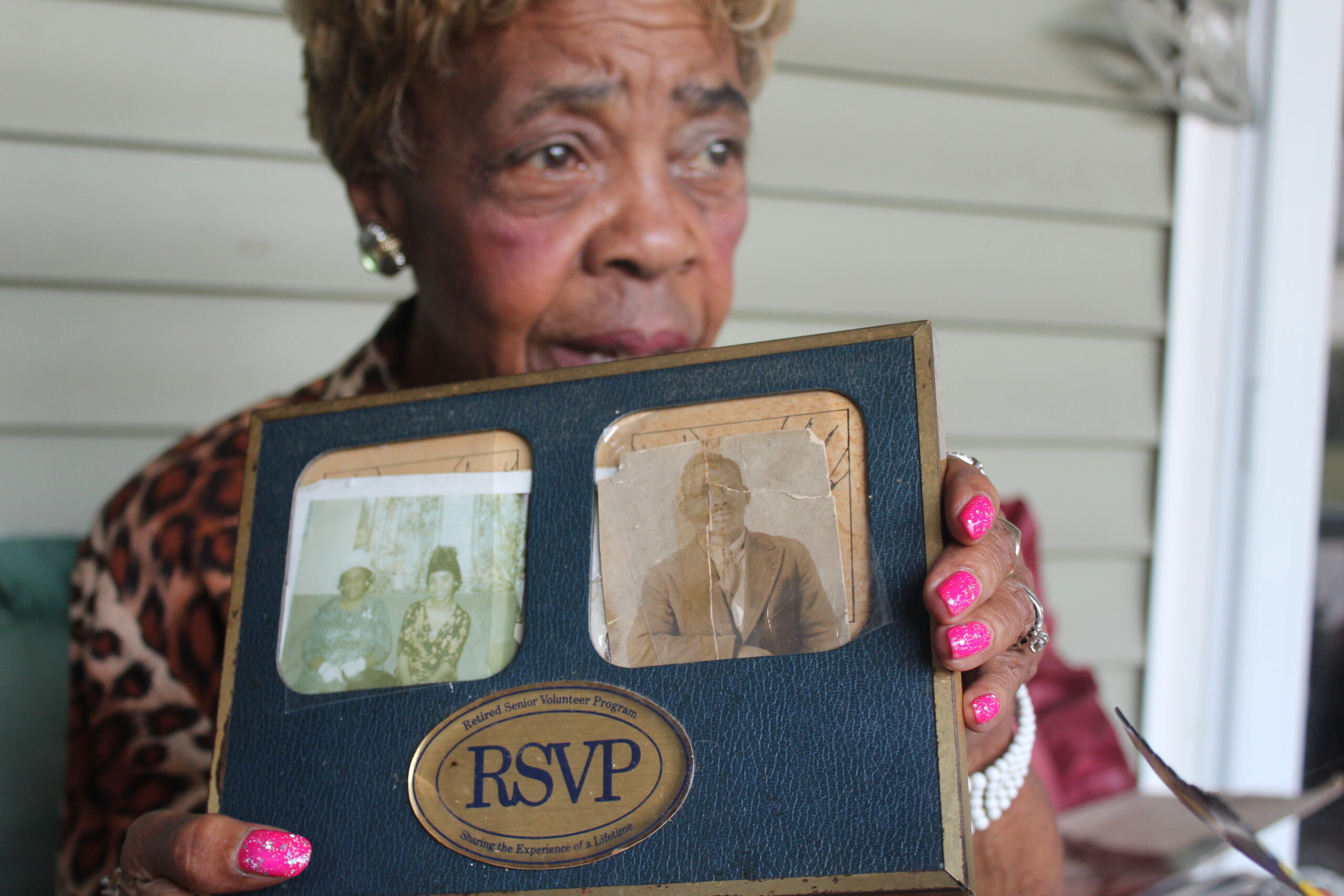
Presently, I am collecting the stories of descendants of survivors of the 1917 East St. Louis Race massacre.
An archivist is defined as an information professional who assesses, collects, organizes, preserves, maintains control over, and provides access to records and archives
Here at The Community Archive we center the stories and history of African-American and African diasporic communities.
If you would like to go to be included in the next Creating A Feminist/Womanist Archive course, join HERE.
Support this work by donating today.
This work was made possible by generous grants from: